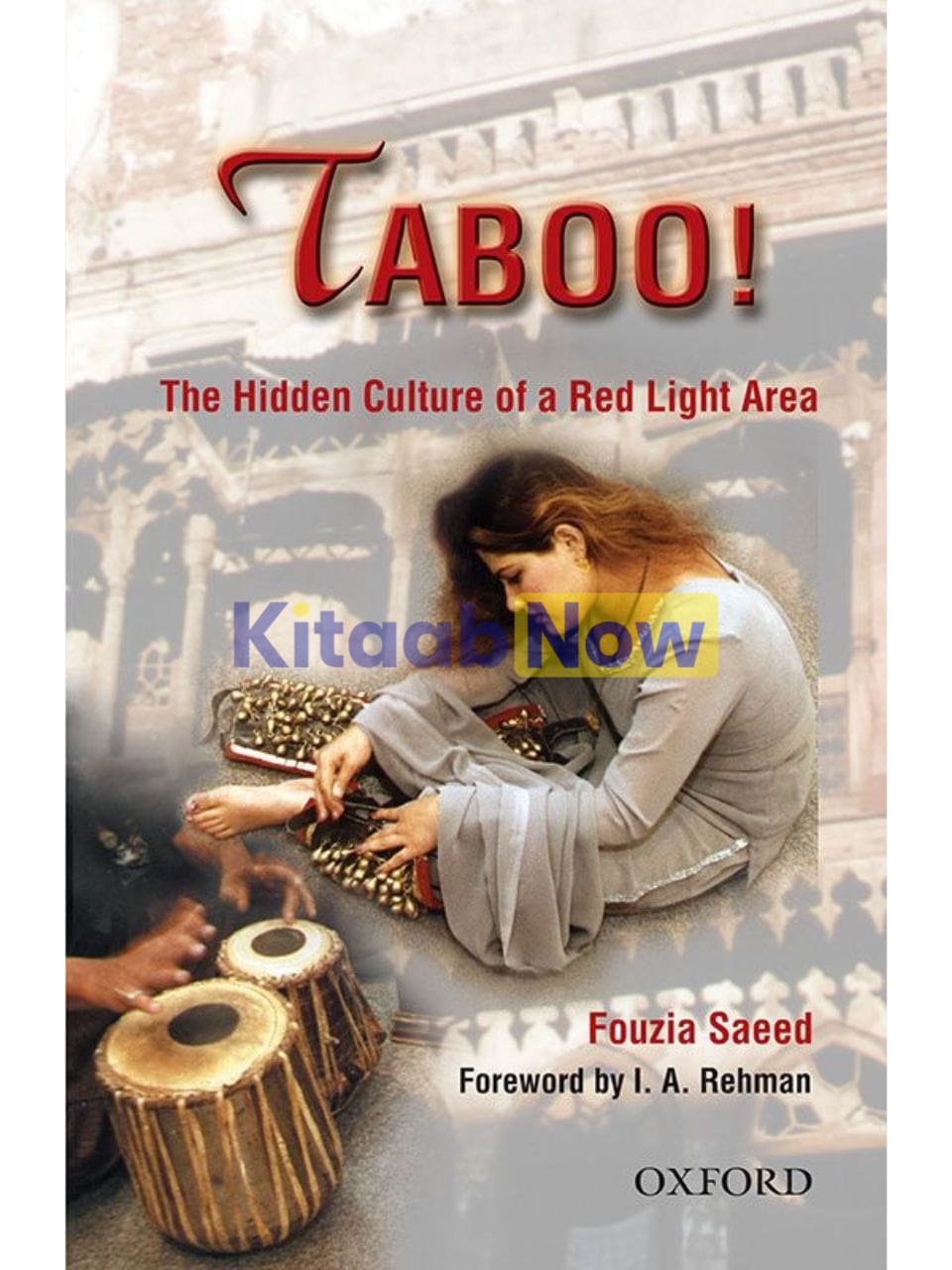
DescriptionThis book is a journey of discovery into the famous red light district of the Shahi Mohalla (the Royal Bazar), or Heera Mandi (the market of diamonds).Pakistani society has created and reinforced many myths to explain why the phenomenon of prostitution has nothing to do with ‘nice people’. These myths put all the blame on immoral women who are understood to be responsible for tricking honest men into sinful acts. Our society has also strongly discouraged anyone from questioning these myths or even trying to look at the issue in a realistic manner. This resistance stems from the unspoken fear that any honest assessment of the situation would uncover the double standards that the South Asian patriarchal system has created for distinguishing ‘good’ from ‘bad’ women, thus threatening our society’s fake sense of morality.The phenomenon of prostitution coupled with music and dance performances has ancient roots in South Asia. The areas where the practice is centered have given birth for centuries to many well-known performing artists. The areas are hubs for creative productions as well as nurture the talents of poets, singers, actors, and the gurus, musicians and composers of classical music. These places are quite different from the typical ‘red light districts’ in the west. The social stigma attached to prostitution has led our governments over the years to initiate several brutal attempts to ‘eradicate’ the phenomenon in the Shahi Mohalla and elsewhere. However, every effort to curb this phenomenon has only resulted in a destruction of the traditional controls over the practice and the links between prostitution and art. Ironically, these efforts also served to drive the practice out of its traditional centers and into the ‘nicer’ parts of the city. As a result, prostitution now flourishes underground in all parts of Lahore, bereft of ancient rules of conduct and involving thousands of women from all walks of life, vulnerable to exploitation and abuse. The double irony is that while public campaigns for eradication continue the practice of prostitution remains quietly protected by the government; just as it has for centuries. Understanding this paradox is the crux of the book.In order to provide an understanding of the traditional practices of prostitution the book attempts to capture a more realistic picture of the phenomenon through the lives of the people who live in the Shahi Mohalla, the musicians, the prostitutes and their pimps, managers and customers. The book describes the lives of people who are struggling to make a living by following ancient traditions, yet not knowing clearly where they fit in the larger picture of present day Pakistan. The book also highlights the contributions that the inhabitants of the Shahi Mohalla have made to our society and to the world of art at large. By breaking these myths that surround the practice of traditional prostitution, the book helps eradicate a blind spot in our understanding of the power relations associated with gender roles throughout our society.Reviews“In Taboo! Fouzia Saeed has given us a valuable socio-cultural interpretation of a subject that was once touched upon and portrayed by Manto. Fouzia has described the historic context of prostitution in the subcontinent in a way that has never been done before. Going to the Shahi Mohalla has long been a taboo for our middle class. Yet Fouzia was able to spend enough time to delve deeply into the morality, ego, and social behaviour of our fading traditional prostitute society.”– Kishwar Naheed, Poet and Author“This is the most readable and yet thoroughly researched account of sex workers in our society. It is as interesting as it is compassionate; and yet it abides by the strictest scholarly criteria of objectivity and scholarly precision. It should be on the reading list of scholars, decision-makers and people belonging to all walks of life.”– Dr Tariq Rahman, Professor, Quaid-i-Azam University“Taboo! is a manifestation of Dr Fouzia Saeed’s passionate fight against the taboos and stigmas of our society, particularly those that affect women. Those who think one loses energy, strength, and determination with age, should follow Dr Fouzia’s example. One day of her life is heavier in both struggle and achievement than several years of many. I am proud to count her among my friends.”– Shoaib Mansoor, Film Director“The deep bonds between India and Pakistan are nurtured by centuries of shared history and culture. The people in India have been enriched by the scholarship and activism of Fouzia Saeed, one of South Asia’s leading feminists. In her study, women in the red-light area of Lahore emerge as persons of substance and worth, making the book local, but also universal in its humanism.”– Harsh Mandar, Author and Social ActivistAuthor BiographyDr Fouzia Saeed has written extensively on Pakistani culture and social issues. Her 2001 ethnography of the walled city of Lahore, Taboo (OUP), retains a cult-like following in five languages. The true story of her successful efforts to counter sexual harassment in her own career, inspiring many who work on this problem today, is chronicled in Working with Sharks.Dr Saeed earned her PhD from the University of Minnesota. Her unique perspective stems from her many roles as a social activist, a development professional, a successful manager, and an accomplished scholar. She has spent over 30 years on social change in Pakistan. While writing her five books, she also created Pakistan’s first women’s crisis centre, successfully advocated for the passage of seven laws for women’s rights, including two against sexual harassment, and revitalised Lok Virsa, Pakistan’s Institute of Folk Heritage.International organisations have frequently acknowledged her work. The World Movement for Democracy produced a film on her life, entitled I Was Not Alone. She is also regularly invited to speak at universities in many countries.